© All Rights Reserved.

Form Finding Lab.
Princeton University

insights

Business insights and articles written by our team of world-class professionals

Publication: Architectural swarms for responsive façades and creative expression

Living architectures, like beehives and ant bridges, adapt to their environments through self-organization of swarming agents. Most human-made architectures are static, and can’t adapt to changing conditions.

That’s why Princeton engineers designed the Swarm Garden, a modular architectural facade that integrates swarm intelligence and robotics. Each module, resembling flowers, uses buckling sheet technology to open and close in response to environmental stimuli.

A paper published in Science Robotics demonstrates two applications. In one study, the team applied a Swarm Garden prototype to an office window to illustrate adaptive shading, where the robotic flowers open and close in response to sunlight. The second study explored creative expressions in interior design where the robotic flowers responded to human interaction during a public exhibition.

M. Alhafnawi, J. Bendarkawi, Y. Tafesse, L. Stein-Montalvo, A. Jones, V. Chow, S. Adriaenssens, R. Nagpal. (2026) ‘Architectural swarms for responsive façades and creative expression.’ Science Robotics, DOI: 10.1126/scirobotics.ady7233

Read more >

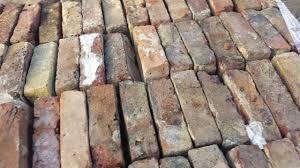
Funding: Decarbonizing loadbearing systems in buildings through AR-enabled Reclaimed Masonry Construction

We are delighted to have been awarded a research grant by the Andlinger Center for Energy and the Environment.

Buildings and infrastructure account for nearly one-third of global CO₂ emissions, with loadbearing systems representing the largest share of embodied carbon due to their reliance on newly manufactured materials. This project develops a structural engineering and construction framework that enables reclaimed masonry (bricks and irregular stones) to function as primary loadbearing elements through a combination of computational design and augmented-reality assisted construction. The research integrates three intellectual advances. These methods will be validated through a full-scale demonstrator co-developed with Skidmore, Owings & Merrill and the International Masonry Institute. The practical implications are significant for the architecture, engineering, and construction (AEC) industry. By transforming discarded masonry units into high-value structural components, the framework reduces material waste, lowers embodied carbon, and enables circular construction practices. Reuse strategies can avoid hundreds of kilograms of CO₂ emissions per square meter of building area, translating to tens to hundreds of tons of carbon savings per building. Beyond environmental benefits, the project strengthens workforce skills by integrating digital guidance with craft-based construction methods. Collectively, the research establishes a scalable pathway for integrating reclaimed materials into mainstream structural engineering, advancing decarbonization goals while expanding sustainable construction practices across industry and society.

Read more >

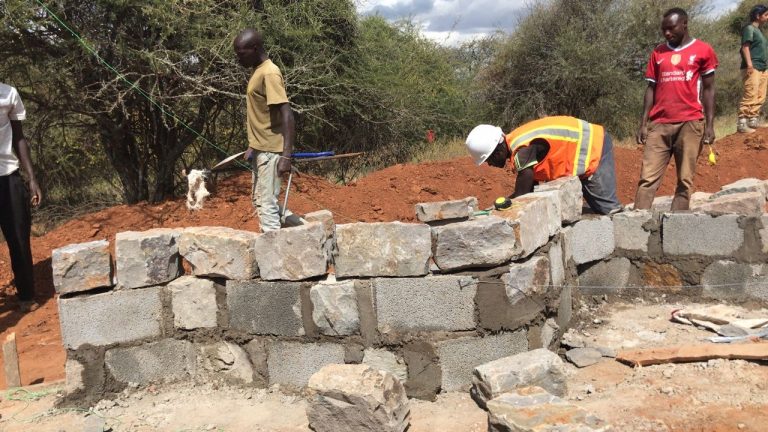
Funding: Low-Carbon, Affordable and Resilient Housing for East Africa

We are delighted to have been awarded a research grant by the MacMillan Foundation.

The population of East Africa is expected to grow from about 513 million in 2025 to 840 million by 2050, increasing the demand for affordable, resilient housing. Traditional construction materials like cement and steel for construction produce over ~11% of global energy and process-related CO₂ emission [2]. This climate change driver combined with the carbon footprint of importing and transporting these materials highlights the need for affordable resilient housing solutions built from local and sustainable materials. Our research goal is to co-develop and validate structurally resilient, affordable housing systems that utilize locally available materials and innovative form-finding design methods to withstand seismic events, while addressing the urgent needs of communities facing rapid urbanization and climate change impacts across diverse East African contexts. We will use design and engineering to elevate local materials to mitigate the stigma associated with their low cost, while leveraging traditional craft toward new tectonic assemblies. The project will create adaptable construction methodologies and assembly techniques that can be transferred and scaled regionally.

Read more >

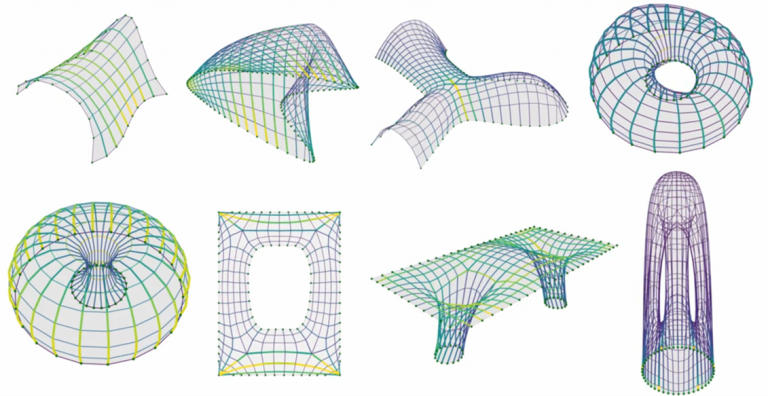
Publication: Differentiable force density method for the design of lightweight structures

The differentiable force density method (DFDM) for lightweight structural design has been published in Computer Methods in Applied Mechanics and Engineering.

📝 Paper (open-access): https://lnkd.in/eKK6XQKD
👾 Python + JAX code: https://lnkd.in/ezuaiRCC

This paper demonstrates how to merge structural mechanics models and differentiable programming for fast shape optimization of structures modeled as pin-jointed bar systems.

The work is comprehensive: it constructs the FDM from first principles using an energy-based standpoint, its nonlinear generalization to 3D to handle shape-dependent and follower loads, and later exposes the gradient-based optimization approach with custom adjoint rules that the DFDM enables for solving inverse problems in structural form-finding.

The DFDM supports flexible design parametrizations for general design constraints within one differentiable framework: force-density optimization, load-finding, and support-finding. We demonstrate this versatility on high-dimensional examples, including shape fitting, pneumatic cable-length control, gridshell planarization with reaction-force minimization, and masonry retrofitting via external post-tensioning.

A major part of the work is validation for speed and correctness. We benchmark the DFDM against analytical and numerical references, study CPU/GPU scaling, and use Taylor remainder tests to verify the accuracy of the hybrid gradient computation. We also include a minimal reproducible implementation where the core logic fits in just 50 lines of Python!

For the structural mechanics community, the message is that automatic differentiation and analytical derivatives work best in tandem – together, they can produce faster and more stable gradients for nonlinear structural optimization. Our mathematical framework can be extended to other structural simulations, particularly for broader finite element models that require iterative solvers, like Newton-Rapshon, for simulation.

For machine learning, the DFDM enables the native integration of analytical mechanical models into neural networks to build trustworthy surrogates for structural optimization that produce accurate solutions in real-time while fully respecting mechanics laws, rather than as a soft penalty.

R. Pastrana,K.U. Bletzinger, D. Oktay, R.P. Adams, S. Adriaenssens (2025) ‘Differentiable force density methodDesigning lightweight structures with differentiable force density method.’ Computer Methods in Applied Mechanics and Engineering.

Read more >

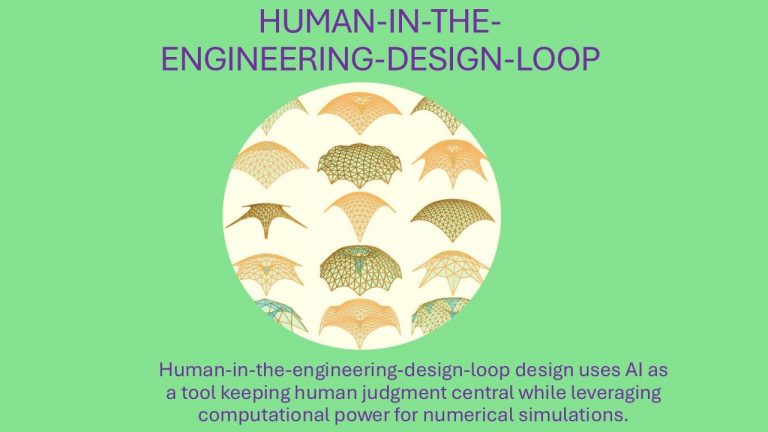
Publication: AI-driven human-in-the-loop structural optimization of gridshells

How can AI support structural designers navigating structural performance, aesthetics (hard to formalize), cost, and sustainability (trade-offs)? Our first human‑in‑the‑design‑loop paper is out now—open access. Many more exciting questions ahead (of course).

Melchiorre, J., Manuello Bertetto, A., Marano, G. C., & Adriaenssens, S. (2026). AI-driven human-in-the-loop structural optimization of gridshells. Computer-Aided Civil and Infrastructure Engineering, 100044

Read more >

Funding: Responsive Earthen Facades: Robotic Additive Manufacturing for Microclimate Resilience

We are thrilled to share that our team has been awarded $200,000 in funding through the High Meadows Environmental Institute (HMEI) Climate and Energy Challenge at Princeton University.

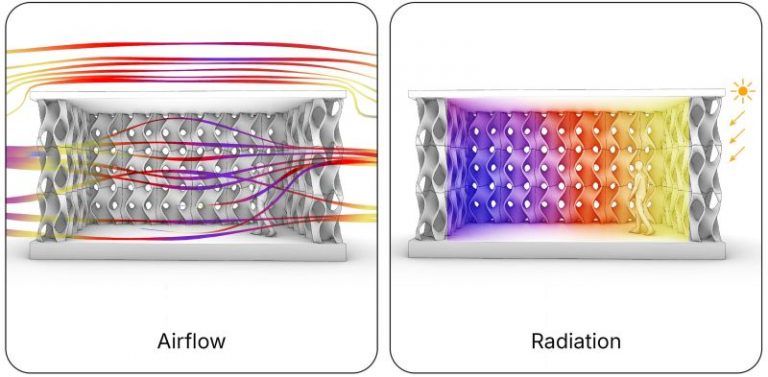
Our collaborative project, “Responsive Earthen Facades: Robotic Additive Manufacturing for Microclimate Resilience,” brings together researchers from architecture, civil and environmental engineering, and climate science to rethink how building envelopes interact with their environment.

Urban areas are increasingly affected by heat buildup, poor ventilation, and rising energy demand. Buildings alone account for a significant share of global energy use, with cooling becoming one of the fastest-growing drivers. By combining urban microclimate modeling, multi-objective optimization, and robotic additive manufacturing, we aim to develop scalable, low-carbon facade systems that reduce energy demand while improving indoor comfort and air quality.

This work reflects a broader vision of integrating AI-driven design, feedback-driven robotics, and sustainable materials to address climate challenges in the built environment.

Team: Arash Adel (PI), Sigrid Adriaenssens (Co-PI), Elie Bou-Zeid (Co-PI), Salma Mozaffari (Co-PI)

Read more >

Publication: Accelerated simulation and design optimization of elastic rod networks with a spline‑based least‑squares formulation

New publication from the Form Finding Lab, now available in Computer Methods in Applied Mechanics and Engineering.

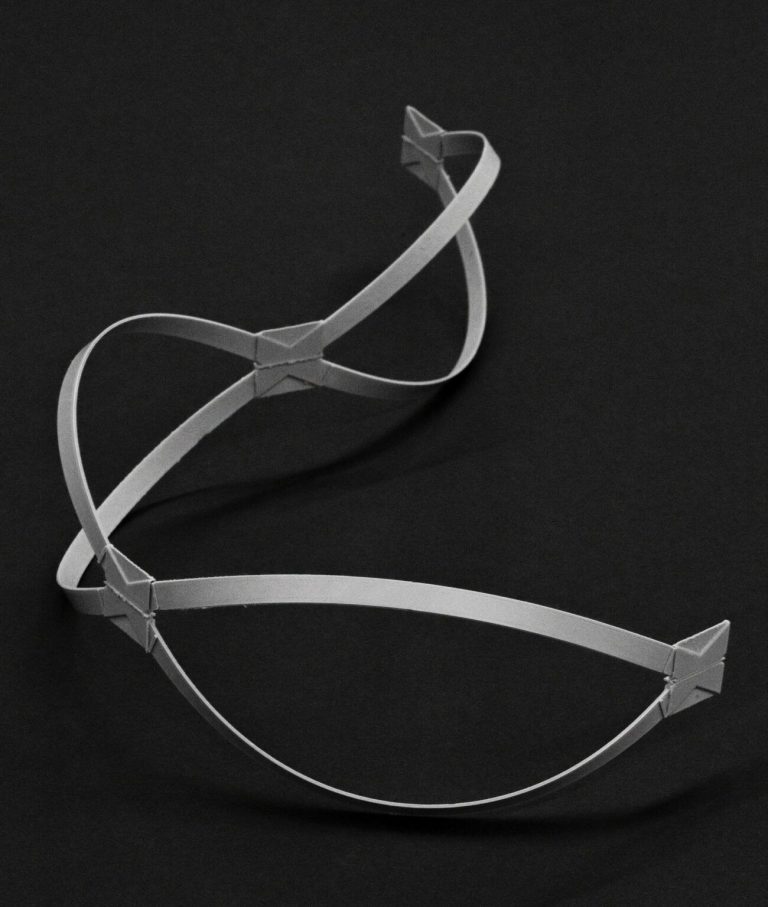
Our paper presents an accelerated simulation and design optimization framework for multi‑stable elastic rod networks (ERNs), with applications in adaptive structures, aerospace engineering, and soft robotics.

ERNs exhibit rich nonlinear and multi‑stable behavior, but their proximity to unstable equilibria makes conventional simulation and optimization approaches computationally challenging. To address this, we introduce a spline‑based least‑squares formulation for solving the Kirchhoff rod boundary value problem, enabling robust and efficient simulations.

The framework is applied to networks composed of bistable bigons assembled into articulated bigon arms. Benchmarks demonstrate significant improvements in computational efficiency and robustness compared to traditional boundary value problem solvers. Building on this, we introduce a physics‑based shape optimization method that allows ERNs to be optimized to approximate target curves and end‑plane constraints. The approach is validated through numerical experiments and physical prototypes.

Reference:
Larsson, A., Hayashi, K., Adriaenssens, S. (2026). Accelerated simulation and design optimization of elastic rod networks with a spline‑based least‑squares formulation. Computer Methods in Applied Mechanics and Engineering, 456, 118925

Read more >

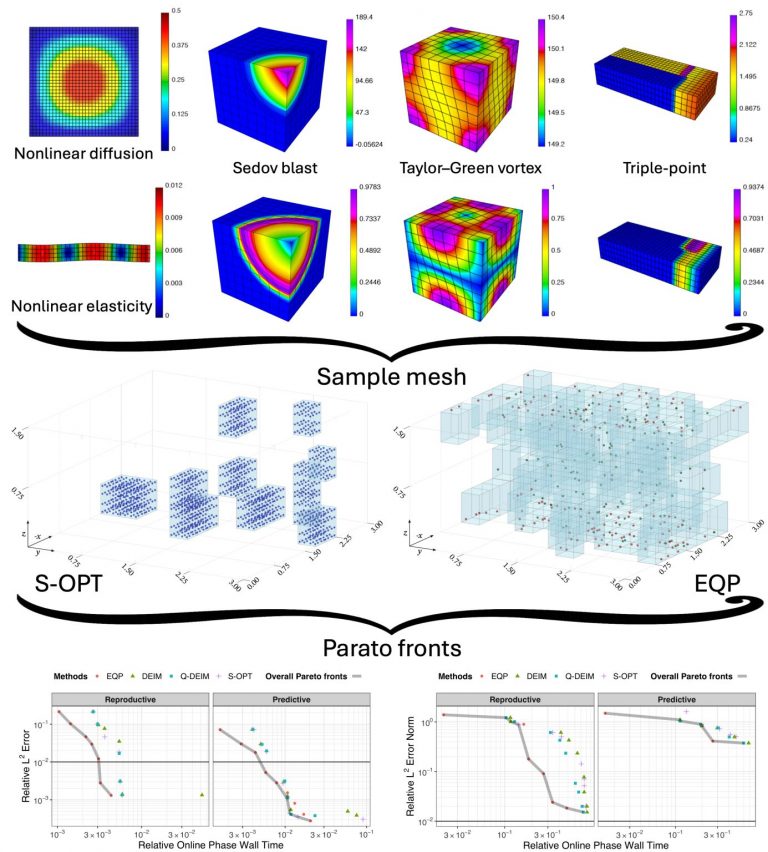
Publication: Hyper-reduction methods for accelerating nonlinear finite element simulations: open source implementation and reproducible benchmarks.

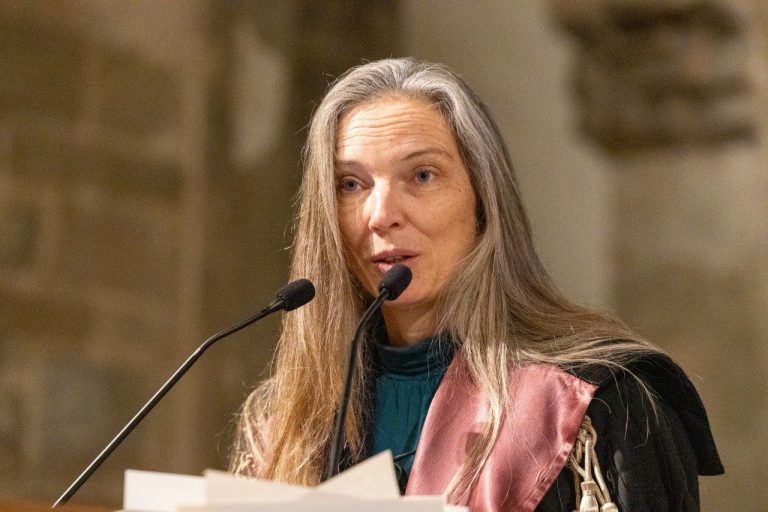
Last week, I had the privilege of delivering the Lectio Magistralis for the graduating Doctors in Philosophy at the University of Bergamo. The ceremony, presided over by Rector Prof. Sergio Cavalieri, was held in the magnificent Aula Magna—once the 13th-century Church of Sant’Agostino, now a place where history and scholarship meet.

In my lecture, “The Life You Design,” I reflected on the journey of a PhD as more than the pursuit of knowledge—it is training for resilience, creativity, and courage in the face of uncertainty. I encouraged graduates to see their lives as evolving prototypes: to embrace experimentation, to redefine success on their own terms, to find strength in diversity, and to design futures that respond to the world’s most pressing challenges.

I left them with five design rules:
* Begin with intention, not certainty.
* Experiment, learn, and adjust.
* Redefine success in your own terms.
* Pay attention to what others overlook.
* Leave room for imperfection and surprise.

Now, these new Doctors step into the world not as passengers, but as designers—ready to ask questions others fear to ask, and to shape the future with imagination and integrity.

Read more >

Lectio Magistralis: The Life You Design

Last week, I had the privilege of delivering the Lectio Magistralis for the graduating Doctors in Philosophy at the University of Bergamo. The ceremony, presided over by Rector Prof. Sergio Cavalieri, was held in the magnificent Aula Magna—once the 13th-century Church of Sant’Agostino, now a place where history and scholarship meet.

In my lecture, “The Life You Design,” I reflected on the journey of a PhD as more than the pursuit of knowledge—it is training for resilience, creativity, and courage in the face of uncertainty. I encouraged graduates to see their lives as evolving prototypes: to embrace experimentation, to redefine success on their own terms, to find strength in diversity, and to design futures that respond to the world’s most pressing challenges.

I left them with five design rules:
* Begin with intention, not certainty.
* Experiment, learn, and adjust.
* Redefine success in your own terms.
* Pay attention to what others overlook.
* Leave room for imperfection and surprise.

Now, these new Doctors step into the world not as passengers, but as designers—ready to ask questions others fear to ask, and to shape the future with imagination and integrity.

Read more >

ready to take your business to the next level?

Get in touch today and receive a complimentary consultation.