© All Rights Reserved.

Form Finding Lab.
Princeton University

Publication: Hyper-reduction methods for accelerating nonlinear finite element simulations: open source implementation and reproducible benchmarks.

Our new paper explores this question through a broad, open-source benchmark study of hyper-reduction methods for nonlinear finite element problems.

The attached figure highlights the main story:
1. a range of benchmark problems, from nonlinear diffusion and nonlinear elasticity to Sedov blast, Taylor–Green vortex, and triple-point problems
2.  a visual comparison of sample mesh constructions, showing how methods such as S-OPT and EQP select very different structures
3.  the resulting accuracy vs. online cost tradeoffs, summarized through Pareto fronts

In the paper, we compare DEIM, Q-DEIM, S-OPT, and EQP across these settings.

Key takeaways: there is no universally best hyper-reduction method. Performance depends strongly on the underlying physics, discretization, and even the time integrator. That said, EQP often shows strong performance when balancing accuracy and speedup, while other methods can be competitive depending on the scenario.

Larsson, A., Kim, M., Vales, C., Adriaenssens, S., Copeland, D. M., Choi, Y., & Cheung, S. W. (2026). Hyper-reduction methods for accelerating nonlinear finite element simulations: open source implementation and reproducible benchmarks. arXiv preprint arXiv:2602.23551.
More insights

Publication: Architectural swarms for responsive façades and creative expression

Living architectures, like beehives and ant bridges, adapt to their environments through self-organization of swarming agents. Most human-made architectures are static, and can’t adapt to changing conditions.

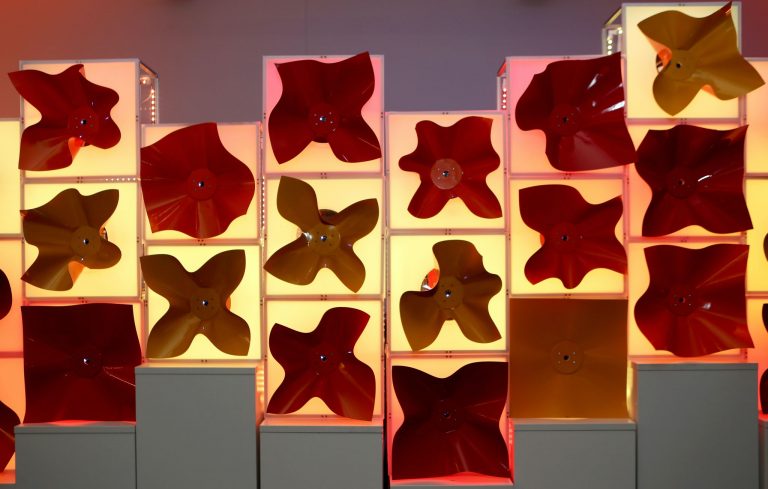
That’s why Princeton engineers designed the Swarm Garden, a modular architectural facade that integrates swarm intelligence and robotics. Each module, resembling flowers, uses buckling sheet technology to open and close in response to environmental stimuli.

A paper published in Science Robotics demonstrates two applications. In one study, the team applied a Swarm Garden prototype to an office window to illustrate adaptive shading, where the robotic flowers open and close in response to sunlight. The second study explored creative expressions in interior design where the robotic flowers responded to human interaction during a public exhibition.

M. Alhafnawi, J. Bendarkawi, Y. Tafesse, L. Stein-Montalvo, A. Jones, V. Chow, S. Adriaenssens, R. Nagpal. (2026) ‘Architectural swarms for responsive façades and creative expression.’ Science Robotics, DOI: 10.1126/scirobotics.ady7233

Read more >

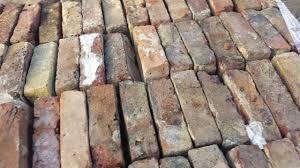
Funding: Decarbonizing loadbearing systems in buildings through AR-enabled Reclaimed Masonry Construction

We are delighted to have been awarded a research grant by the Andlinger Center for Energy and the Environment.

Buildings and infrastructure account for nearly one-third of global CO₂ emissions, with loadbearing systems representing the largest share of embodied carbon due to their reliance on newly manufactured materials. This project develops a structural engineering and construction framework that enables reclaimed masonry (bricks and irregular stones) to function as primary loadbearing elements through a combination of computational design and augmented-reality assisted construction. The research integrates three intellectual advances. These methods will be validated through a full-scale demonstrator co-developed with Skidmore, Owings & Merrill and the International Masonry Institute. The practical implications are significant for the architecture, engineering, and construction (AEC) industry. By transforming discarded masonry units into high-value structural components, the framework reduces material waste, lowers embodied carbon, and enables circular construction practices. Reuse strategies can avoid hundreds of kilograms of CO₂ emissions per square meter of building area, translating to tens to hundreds of tons of carbon savings per building. Beyond environmental benefits, the project strengthens workforce skills by integrating digital guidance with craft-based construction methods. Collectively, the research establishes a scalable pathway for integrating reclaimed materials into mainstream structural engineering, advancing decarbonization goals while expanding sustainable construction practices across industry and society.

Read more >

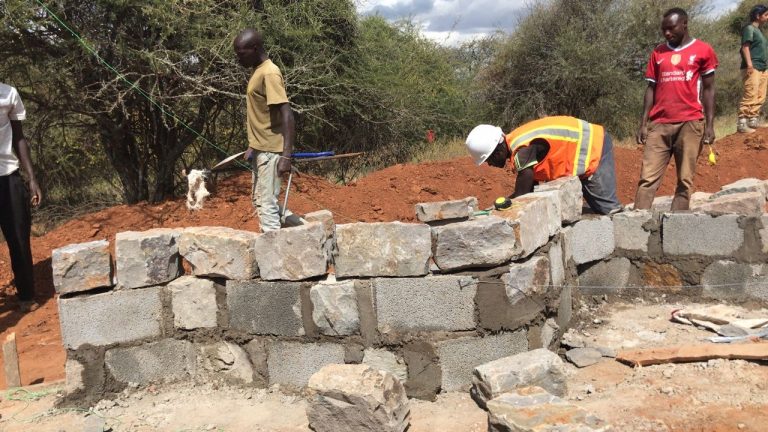
Funding: Low-Carbon, Affordable and Resilient Housing for East Africa

We are delighted to have been awarded a research grant by the MacMillan Foundation.

The population of East Africa is expected to grow from about 513 million in 2025 to 840 million by 2050, increasing the demand for affordable, resilient housing. Traditional construction materials like cement and steel for construction produce over ~11% of global energy and process-related CO₂ emission [2]. This climate change driver combined with the carbon footprint of importing and transporting these materials highlights the need for affordable resilient housing solutions built from local and sustainable materials. Our research goal is to co-develop and validate structurally resilient, affordable housing systems that utilize locally available materials and innovative form-finding design methods to withstand seismic events, while addressing the urgent needs of communities facing rapid urbanization and climate change impacts across diverse East African contexts. We will use design and engineering to elevate local materials to mitigate the stigma associated with their low cost, while leveraging traditional craft toward new tectonic assemblies. The project will create adaptable construction methodologies and assembly techniques that can be transferred and scaled regionally.

Read more >