© All Rights Reserved.

Form Finding Lab.
Princeton University

Journal Publication: Integration of Kinks and Creases Enables Tunable Folding in Meta-ribbons

You can read about our important work on the mechanics of kinks and creases now in Matter. Free downloads here

https://lnkd.in/eNu48a5G


Highlights

The nonlinear folding behaviors of annular ribbons are comprehensively investigated
•The folding mechanism and bifurcation type of elastic annular ribbons are uncovered
•The meta-ribbon is created by integrating in-plane kinks and out-of-plane creases
•The tunable dynamic folding behavior of a meta-ribbon is achieved

Progress and potential

Exploring how thin structures fold can lead to innovative technologies in fields like soft robotics, flexible electronics, and space deployable systems. By studying the mechanics of folding in elastic ribbons, through discrete model, theory, and experiment, we uncovered that different types of folds, i.e., in-plane kinks and out-of-plane creases, initiate folding in distinct ways and correspond to different types of bifurcation. We also found that by combining these folds strategically, we can create “meta-ribbons,” which can fold smoothly or abruptly based on how they are engineered. This tunability opens doors for advantages like controllable dynamic folding and transitions among different stable states, offering exciting possibilities for future technologies. 
More insights

Publication: Architectural swarms for responsive façades and creative expression

Living architectures, like beehives and ant bridges, adapt to their environments through self-organization of swarming agents. Most human-made architectures are static, and can’t adapt to changing conditions.

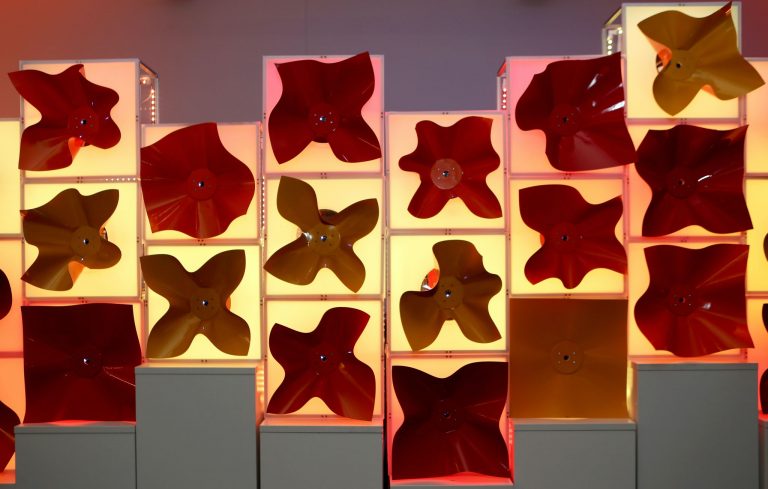
That’s why Princeton engineers designed the Swarm Garden, a modular architectural facade that integrates swarm intelligence and robotics. Each module, resembling flowers, uses buckling sheet technology to open and close in response to environmental stimuli.

A paper published in Science Robotics demonstrates two applications. In one study, the team applied a Swarm Garden prototype to an office window to illustrate adaptive shading, where the robotic flowers open and close in response to sunlight. The second study explored creative expressions in interior design where the robotic flowers responded to human interaction during a public exhibition.

M. Alhafnawi, J. Bendarkawi, Y. Tafesse, L. Stein-Montalvo, A. Jones, V. Chow, S. Adriaenssens, R. Nagpal. (2026) ‘Architectural swarms for responsive façades and creative expression.’ Science Robotics, DOI: 10.1126/scirobotics.ady7233

Read more >

Funding: Decarbonizing loadbearing systems in buildings through AR-enabled Reclaimed Masonry Construction

We are delighted to have been awarded a research grant by the Andlinger Center for Energy and the Environment.

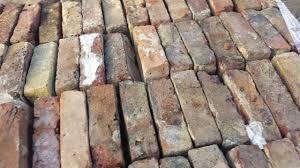
Buildings and infrastructure account for nearly one-third of global CO₂ emissions, with loadbearing systems representing the largest share of embodied carbon due to their reliance on newly manufactured materials. This project develops a structural engineering and construction framework that enables reclaimed masonry (bricks and irregular stones) to function as primary loadbearing elements through a combination of computational design and augmented-reality assisted construction. The research integrates three intellectual advances. These methods will be validated through a full-scale demonstrator co-developed with Skidmore, Owings & Merrill and the International Masonry Institute. The practical implications are significant for the architecture, engineering, and construction (AEC) industry. By transforming discarded masonry units into high-value structural components, the framework reduces material waste, lowers embodied carbon, and enables circular construction practices. Reuse strategies can avoid hundreds of kilograms of CO₂ emissions per square meter of building area, translating to tens to hundreds of tons of carbon savings per building. Beyond environmental benefits, the project strengthens workforce skills by integrating digital guidance with craft-based construction methods. Collectively, the research establishes a scalable pathway for integrating reclaimed materials into mainstream structural engineering, advancing decarbonization goals while expanding sustainable construction practices across industry and society.

Read more >

Funding: Low-Carbon, Affordable and Resilient Housing for East Africa

We are delighted to have been awarded a research grant by the MacMillan Foundation.

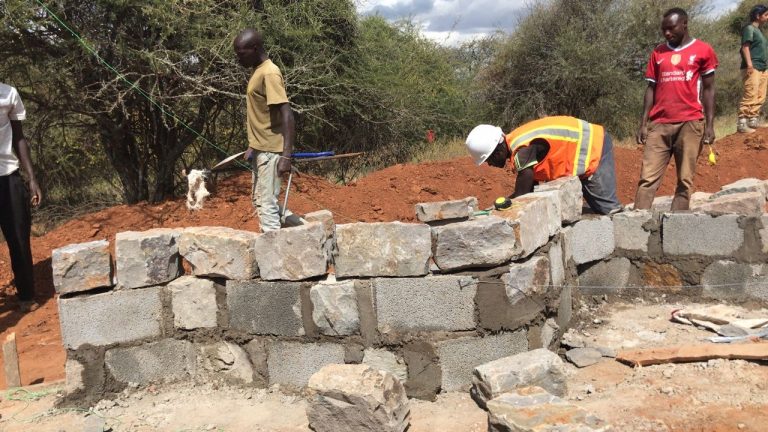
The population of East Africa is expected to grow from about 513 million in 2025 to 840 million by 2050, increasing the demand for affordable, resilient housing. Traditional construction materials like cement and steel for construction produce over ~11% of global energy and process-related CO₂ emission [2]. This climate change driver combined with the carbon footprint of importing and transporting these materials highlights the need for affordable resilient housing solutions built from local and sustainable materials. Our research goal is to co-develop and validate structurally resilient, affordable housing systems that utilize locally available materials and innovative form-finding design methods to withstand seismic events, while addressing the urgent needs of communities facing rapid urbanization and climate change impacts across diverse East African contexts. We will use design and engineering to elevate local materials to mitigate the stigma associated with their low cost, while leveraging traditional craft toward new tectonic assemblies. The project will create adaptable construction methodologies and assembly techniques that can be transferred and scaled regionally.

Read more >